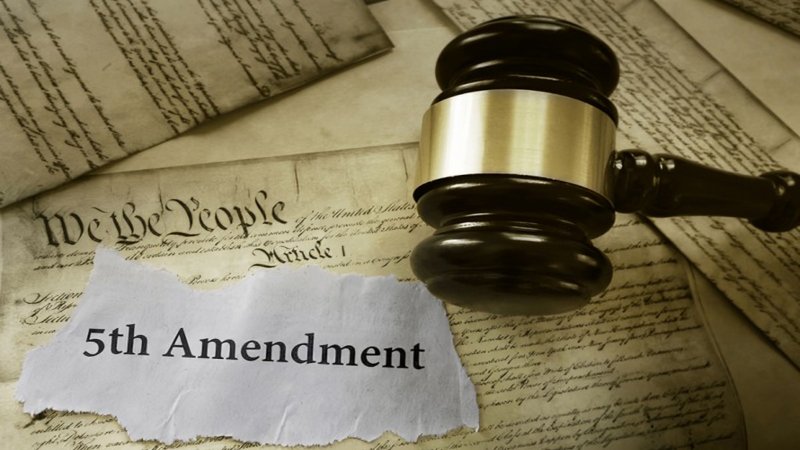
The Fifth Amendment is one of the most well-known constitutional protections in the United States. It gives individuals the right to avoid answering questions that could potentially incriminate them in a criminal matter.
Many people ask, what does invoking the Fifth mean? Simply put, it means exercising your constitutional right to remain silent when answering a question could provide evidence that may be used against you in a criminal prosecution.
Understanding the Fifth Amendment
The right to invoke the Fifth comes from the Fifth Amendment to the U.S. Constitution, which states that no person “shall be compelled in any criminal case to be a witness against himself.” This protection helps ensure that individuals are not forced to provide testimony that could later be used against them.
The privilege against self-incrimination applies in a variety of legal settings, including criminal trials, investigations, depositions, and certain civil proceedings. It serves as a fundamental safeguard within the American justice system.
How Do You Invoke the Fifth Amendment?
Invoking the Fifth Amendment is not automatic. A person generally must clearly state that they are exercising their right against self-incrimination.
For example, a witness may respond by saying, “I invoke my Fifth Amendment right against self-incrimination.” Once asserted, the court or questioning attorney must determine whether the privilege applies to the specific question being asked.
What Happens in a Criminal Case?
In criminal proceedings, defendants have a constitutional right not to testify. Prosecutors cannot force a defendant to take the stand and answer questions that may be self-incriminating.
Additionally, jurors generally cannot treat a defendant’s decision to remain silent as evidence of guilt. This protection helps ensure that individuals are not penalized for exercising a constitutional right.
What Happens in a Civil Case?
The situation can be different in civil litigation. While a person may still invoke the Fifth Amendment, the court may sometimes allow an adverse inference to be drawn from that refusal to answer.
In other words, a judge or jury in a civil case may consider the refusal when evaluating the evidence. However, the specific impact depends on the circumstances and applicable law.
Can Witnesses Invoke the Fifth?
Yes, witnesses can invoke the Fifth Amendment if answering a question could expose them to criminal liability. The privilege is not limited to defendants.
A witness may answer some questions while refusing to answer others. The protection generally applies on a question-by-question basis rather than allowing a witness to avoid all testimony entirely.
What Happens When Immunity Is Granted?
There are situations where a witness may be compelled to testify after receiving immunity from prosecution. Under 18 U.S.C. § 6002, federal courts may require testimony when the witness is granted immunity that prevents the compelled statements from being used against them in a criminal case.
Once appropriate immunity is granted, a witness may no longer be able to refuse to answer certain questions based solely on the Fifth Amendment. This allows the government to obtain necessary testimony while still protecting constitutional rights.
Does Invoking the Fifth Mean Someone Is Guilty?
Many people mistakenly believe that invoking the Fifth Amendment is an admission of wrongdoing. In reality, exercising a constitutional right does not automatically indicate guilt.
There are many situations in which innocent individuals may choose to remain silent. Legal counsel often advises clients to avoid providing statements that could be misunderstood or used against them later.
Why Legal Guidance Matters
Invoking the Fifth Amendment can have significant legal consequences. Whether the privilege applies often depends on the facts of the case and the nature of the questions being asked.
An attorney can help determine when it is appropriate to invoke the right and how doing so may affect criminal or civil proceedings. Seeking legal advice can help protect an individual’s rights throughout the process.
Key Takeaways
- The Fifth Amendment to the U.S. Constitution protects individuals from being compelled to incriminate themselves.
- Invoking the Fifth means exercising the right to remain silent when an answer could lead to criminal liability.
- Criminal defendants generally cannot be forced to testify against themselves.
- Witnesses may also invoke the Fifth Amendment when appropriate.
- Under 18 U.S.C. § 6002, a witness may be compelled to testify after receiving certain immunity protections.
- Invoking the Fifth does not automatically indicate guilt.
- Consulting an attorney can help ensure that constitutional rights are properly protected.
Disclaimer: The information provided by Outstanders is for general informational and educational purposes only and is not legal advice. We strive to provide accurate, current, and reliable legal information based on reputable sources, but we do not guarantee that every statement, legal reference, or explanation is complete, accurate, or up to date. Laws, court decisions, and legal procedures may change over time and can vary depending on the circumstances and jurisdiction. Readers should verify important information with official legal sources or consult a qualified attorney before relying on it.

Malik Bilal is a business strategist and Editor at Outstanders, specializing in business, technology, health, and general-interest content. With more than 4 years of experience in business and technology writing, he creates insightful, research-backed articles designed to educate, inform, and inspire readers. His expertise lies in breaking down complex topics into clear, actionable content while maintaining high editorial standards, accuracy, and trustworthiness.