
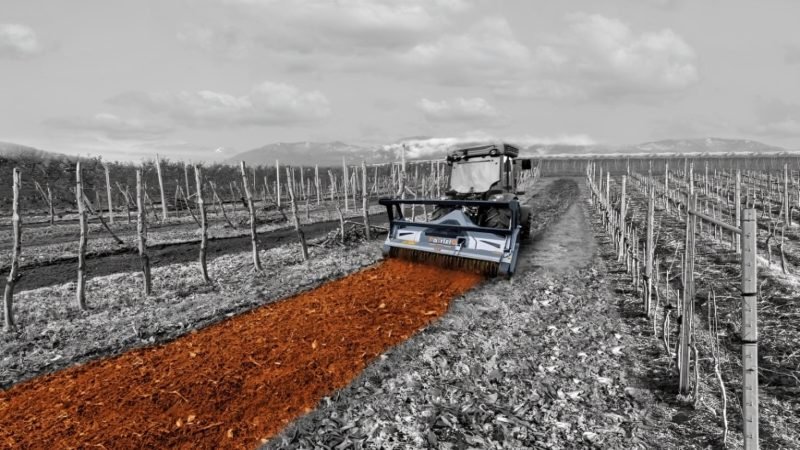
Land left unmanaged for extended periods can quickly become difficult to access and maintain. As shrubs, brush, and young trees spread, previously usable areas may lose their practical value for agricultural activities, property maintenance, or future projects.
Restoring these spaces requires an effective approach to vegetation control. Forestry mulchers offer a practical solution by processing woody overgrowth directly on site, helping professionals reclaim neglected land and prepare it for new uses.
Why overgrown land becomes difficult to manage
Without regular maintenance, vegetation can spread unevenly across a property, gradually covering access routes, open ground, and areas intended for specific activities. Dense brush, tangled branches, and uncontrolled tree growth can make routine inspections and maintenance increasingly challenging.
Overgrown vegetation may also conceal rocks, uneven surfaces, and other obstacles, complicating future clearing operations. For agricultural businesses, landowners, and professional contractors, these conditions can limit accessibility and delay planned land use.
Understanding the extent of vegetation growth and the characteristics of the site is therefore essential for identifying an appropriate clearing strategy and restoring the area’s functionality.
How forestry mulchers simplify land clearing operations
Forestry mulchers provide an efficient way to manage overgrown land by shredding woody vegetation directly where it stands. Instead of relying on separate operations to cut, collect, and transport branches, shrubs, and small trees, these attachments combine vegetation cutting and material reduction into a streamlined process.
Depending on the size of the property, terrain conditions, and vegetation density, forestry mulchers can be paired with tractors, skid steers, excavators, or specialized carriers. This flexibility allows professionals to work across extensive rural properties as well as smaller areas with limited access.
Another practical advantage is the ability to leave processed vegetation on site as mulch, reducing the need for debris removal. However, additional clearing or soil preparation may still be necessary depending on the intended future use of the land.
Turning neglected areas into functional spaces
Once excessive vegetation has been cleared, previously inaccessible land can be evaluated for different purposes. In agricultural settings, forestry mulching can help reclaim fields affected by woody encroachment, making it easier to assess the ground and plan subsequent cultivation activities.
For rural properties and commercial sites, removing dense brush can reopen access routes, restore visibility, and make space available for routine maintenance or infrastructure improvements. The same approach can support the rehabilitation of neglected green areas where uncontrolled vegetation has limited access.
Forestry mulching can also serve as an initial step in preparing sites for replanting or environmental restoration. However, the work required afterward depends on the intended use: agricultural cultivation may require stump and root removal, soil conditioning, or grading, while other projects may only need vegetation reduction and periodic maintenance.
Planning effective vegetation clearing on neglected land
Before starting a clearing project, professionals should assess the site’s accessibility, ground conditions, and vegetation distribution. Identifying hidden obstacles, underground utilities, and areas with limited maneuvering space helps determine where equipment can operate safely and which sections may require a different approach.
The intended use of the property also influences how the work should be organized. Areas designated for agricultural activities, access roads, or green space maintenance may require different levels of clearing.
Once the initial intervention is complete, scheduling periodic inspections and vegetation control helps prevent excessive regrowth, reducing the need for more extensive clearing operations in the future.
Restoring long-term value to neglected land
Reclaiming overgrown land involves more than removing unwanted vegetation. It requires a clear understanding of how the area will be used and maintained over time. By incorporating forestry mulchers into a planned clearing strategy, professionals can restore access to neglected properties and establish suitable conditions for future land management activities.
FAE forestry mulchers: combining technological innovation and field experience
Since 1989, FAE has specialized in the design and manufacture of professional attachments for tractors, excavators, skid steers, tracked carriers, and special vehicles. With more than three decades of experience, the company has developed extensive engineering expertise across several industries, including forestry, agriculture, road construction, and demining, establishing a strong international presence.
FAE’s product portfolio comprises more than 400 models across over 90 product lines, with forestry mulchers occupying a prominent position in its range. Engineered for intensive professional applications, these machines feature reinforced structures, high-strength materials, and wear-resistant components for dependable performance and long-term durability.
FAE forestry mulchers are developed to process a wide variety of woody materials, including trees, branches, shrubs, stumps, and roots, with diameters of up to 20 inches. Their robust construction and efficient cutting capabilities support consistent results across different vegetation types and challenging operating environments.
Available for multiple carrier configurations, forestry mulchers combine operational flexibility, structural strength, and high productivity. This versatility allows professionals to select equipment suited to specific working requirements while maintaining reliable performance during demanding vegetation management operations.
Through continuous investment in research, technological development, and engineering innovation, FAE continues to enhance its forestry mulching solutions. By combining decades of practical experience with ongoing product improvements, the company delivers equipment designed to meet the evolving requirements of professional land management worldwide.

Malik Bilal is a business strategist and Editor at Outstanders, specializing in business, technology, health, and general-interest content. With more than 4 years of experience in business and technology writing, he creates insightful, research-backed articles designed to educate, inform, and inspire readers. His expertise lies in breaking down complex topics into clear, actionable content while maintaining high editorial standards, accuracy, and trustworthiness.